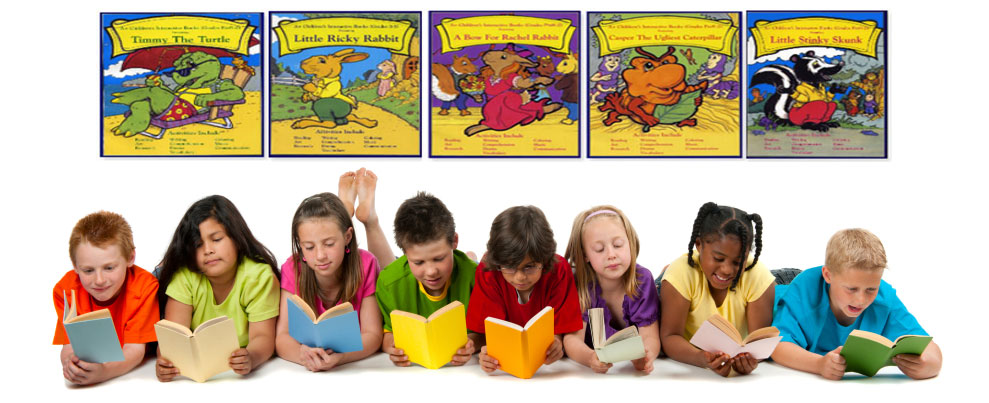
Introducing Children Music Leads To Success
The Benefits of Children Music
According to study, children music stimulates certain brain connections and can actually help children grow smarter!
Children Music also provides an invaluable outlet for safe expression of feelings and emotions, and can also serve as an important learning tool throughout your children’s lives!
Children Music helps educate in many ways, by developing children’s memory skills and nourishing their spirit.
Now, some children are a bit resistant to music at first, but you can easily find ways to encourage them to enjoy children music in many different forms early in life.
You need to simply adopt some creative ways to introduce children music in your children’s life without forcing them to take on a task they aren’t interested in (Hint: don’t go buy a saxophone and tell them to practice or else).
Here’s how you can successfully and gently introduce children music into your children’s life:
- Allow them the opportunity to select an instrument they are interested in. Even if that instrument is something you consider too large or incompatible for them. Be willing to let your children make their own decisions and encourage them when they do.
- Play a variety of different music in the home whenever your children are around. Turn on the radio and turn off the TV, and make a point to try and play something different every day.
- Teach your children how to sign songs. Children learn through music. You can use songs to teach numbers, the alphabet and even help develop basic memory skills.
- Help your children make up their own songs. This will encourage them to use their natural creativity and talent.
- Hum a tune with your child. Praise them when they try something a little different.
- Consider taking your children to age appropriate concerts.
There are many concerts specifically designed with children in mind, chock full of songs and beats that will entertain and delight even the youngest of children.
Music is an important part of the developmental process children go through.
Children who are involved in activities such as band or other musical outlets are less likely to get involved in problematic behaviors and dangerous after school activities.
Children Music has even reportedly increased the intelligence of newborns, particularly building spatial reasoning.
Children Music also makes the world a happier place to live in. You’ll enjoy learning as much as your children will, and you can even explore music together!
By introducing children music while they are still young, you will ultimately improve their lives and their appreciation of the world in many ways.
8 Reasons Why Your Child Has No Interest In Learning To Read
Child’s Disinterest in Learning To Read
Are you troubled by your child’s disinterest in learning to read? It seems that everyone from a child’s teacher to Mom and Dad and even Grandma is excited and waiting for the child to learn to read. All the pressure and expectations from the adults can sure put a damper on the excitement for the child. This loss of excitement can lead to a child who loses the interest to learning to read.
You try to encourage them the learning to read by reading together. However, each reading session is a struggle. Your child shuns it like a hated vegetable . Or maybe your child can already read, but just doesn’t want to. They even tell you straight in your face, “I hate reading.”
How did it come to this? Why does your child has no interest in learning to read? Basically, it comes down to one thing: the love for reading was never ignited or have been extinguished. Here are the reasons why your child has no interest in learning to read.
8 Reasons Why Has No Interesting In Learning To Read:
1. Reading sessions are more like drilling sessions. Don’t quiz and test children when reading. It’s ok to point things out and ask questions to promote thinking but make sure it stays FUN. Don’t turn it into a pressurized teaching session. Yes, you hope that they learn something from the reading but don’t make that your main objective. Read to enjoy the story. Learning usually takes place when the teaching is not so obvious.
2. Television, video and computer games takes center stage when it comes to relaxation and entertainment. These strongly distracts children from reading. There needs to be a limit to these activities if you want to convince them that books can be entertaining too.
3. Reading books that are too difficult for their reading level. It is very discouraging for children to open a book and not know how to read many of the words. Where is the joy when you struggle to get through a page? Know your child’s reading ability and get books appropriate to their level.
4. Reading sessions turn into screaming and put down sessions. Parents need to hold realistic expectations of their children. Control frustrations when children don’t excel as fast as you wish they would. Watch your tongue and avoid derogatory remarks such as “Can’t you remember that word, we just read it,” or “I’ve told you many times already. What’s wrong with you?”
5. Reading books that are of no interest to them. How do children regard these books? BORING! To a young boy, reading a book on dinosaurs may be more captivating than reading a book about Dick and Jane. Draw your teenagers into reading with books that they can relate too. I know when I was that age I was game for books on love, romance, and friendship. Capitalize on your child’s hobbies and interests.
6. Forced reading. For older children, sometimes homework is in the form of assigned readings. Usually a report has to be handed in at the end. Although this is done under good intentions, it is easy for a child to regard reading as a chore to be done. Very likely too, the assigned reading is not of their choice and therefore, not of their liking. Reading in this situation is like dragging feet in the mud.
7. Peer pressure. This is another factor that affects older children. Kids can be cruel with their branding and teasing. The term “nerds” and “geeks” are usually thrown at those that indulge in books. Your child may very well choose to shun books just to fit in and be one of the “cool kids.”
8. Limiting what children read. Imagine if you loved sci-fi books but was told you could only read classics. What a damper that would be for you right? Be open to what your child wants to read. You may think your child has moved passed picture books but he wants it anyway. Let him. Or you may think reading comic books have less educational value then reading well known novels. Remember, it’s a book in their hands nonetheless. So, whether it be fiction, non-fiction, picture books, comic books, magazines etc… be supportive.
You want to get your child learning to read, you have to first show that it is fun and enjoyable. Don’t push too hard to get your child to learning to read children’s books. Only when there is love for reading can the learning begin.
Home Schooling Benefits To Both Parents And Children
Home Schooling Benefits
Parents choose home schooling for many different reasons. Some families want to build up their family ties; home schooling offers the parents freedom to create and pattern individualized and specific curriculum, safety reasons, peer pressure and discontentment with the school system.
Home Schooling Benefits To Parents
Home schooling moms and dads devote a lot of time guiding and working with their kids, usually having the feeling that modern fast paced living is ruing the closeness of the family.
Family undertakings and activities like shared chores, group projects and games are consistent elements of the home school plan, wherein these families benefit from the quality time they devote to each other. Parents believe that homeschooling reinforces the family and permits the children to formulate their own personal decisions and choices without the influence of peer pressure.
Home Schooling Benefits To Children
One doesn’t have to have or acquire a remarkable educational attainment or background or have plenty of money in order to be successful at homeschooling. Studies show that parents who merely finish high school or even less can do a good job in educating and teaching in homeschool as those parents with education degrees.
The structure that you want for your child’s educational knowledge and involvement will be determined whether you settle to teach from a “homeschool curriculum” package or an unstructured home schooling approach, offering individualized and flexible time, allowing you to teach subjects in accordance to the child’s development and interest; the quantity of unit or hours of learning per subject would be entirely to your own judgment.
Home schooling permits the parents to adapt and customize the curriculum according to the child’s learning capabilities. Children needing extra time to spend developing their math skills will be provided with that time, by cutting the period of time spent on subjects that the child is progressing well on so that he/she can have ample time to spend in his weak area.
In addition, parents can also construct the curriculum to meet the child’s personal learning style; some kids’ learn best through hearing, others through reading, and others are hands-on learners. It is only in home schooling that children can go into and investigate subject matters in such a manner that they “learn best”.
Home schooling benefits are only as restricted as to the parents’ own imagination and creativity. As the child’s parent, nobody is more familiar with what informative interests your child holds and only in a home school and as a teaching parent can you can find out and establish the time required to be used on any subject for your kids to complete and accomplish with the understanding and support that they truly deserve.
share